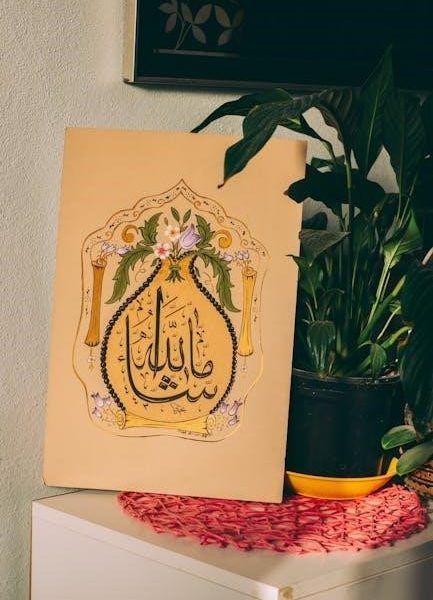
Arabic letter PDFs are gaining traction as valuable tools for learners, offering accessible and focused practice. These resources combine visual aids with interactive exercises,
boosting comprehension and retention.
The Growing Demand for Arabic Learning Materials
The demand for Arabic learning materials is experiencing significant growth globally, fueled by diverse motivations. Increased geopolitical interest, expanding business opportunities in the Middle East and North Africa, and a rising appreciation for Arabic culture and Islamic studies are key drivers. This surge extends specifically to resources focused on foundational elements like the Arabic alphabet.
Consequently, there’s a heightened need for accessible and effective learning tools. Many individuals are seeking self-paced learning options, making Arabic letter PDF resources particularly appealing. These PDFs cater to a broad audience, from beginners with no prior exposure to the script to those seeking to refine their foundational skills. The convenience and portability of PDF format further contribute to their popularity, allowing learners to study anytime, anywhere.
Why PDF Format is Popular for Arabic Letter Learning
PDFs are a favored format for learning the Arabic alphabet due to their inherent advantages. Their universal compatibility ensures accessibility across various devices – computers, tablets, and smartphones – without formatting issues. This portability allows learners to practice anytime, anywhere, fostering consistent study habits. Furthermore, PDFs often incorporate interactive elements like tracing exercises and coloring pages, enhancing engagement.
The static nature of PDFs also preserves the integrity of the intricate Arabic script, crucial for accurate visual learning. Many Arabic letter PDF resources include audio integration via embedded links or QR codes, supporting pronunciation practice. The cost-effectiveness, with numerous free options available, adds to their appeal, making Arabic language learning more accessible to a wider audience.

Understanding the Arabic Alphabet
The Arabic alphabet comprises 28 letters, distinct in shape and sound. Mastering these foundational elements, often aided by Arabic letter PDF guides, is key to literacy.
The Unique Characteristics of Arabic Script
Arabic script possesses several defining features that differentiate it from the Latin alphabet. Notably, letters change form depending on their position within a word – initial, medial, final, or isolated. This contextual shaping requires dedicated practice, often facilitated by Arabic letter PDF resources showcasing these variations.
Furthermore, many letters share the same basic shape but are distinguished by the placement of dots. Accurate differentiation is crucial for correct reading and writing, and Arabic letter PDF charts often highlight these subtle distinctions. The script’s cursive nature, where most letters connect, adds another layer of complexity.
Understanding these nuances is paramount for learners, and well-designed Arabic letter PDF materials provide clear visual examples and tracing exercises to aid in mastering these unique characteristics. These PDFs often emphasize the clockwise direction of letter formation, as indicated by arrows in instructional diagrams.
Right-to-Left Writing Direction
A fundamental aspect of Arabic script is its right-to-left (RTL) writing direction, a concept often challenging for learners accustomed to left-to-right languages. Arabic letter PDF resources play a vital role in acclimating students to this difference, presenting letters and words in the correct sequence.
Initial practice with Arabic letter PDF worksheets should emphasize forming letters following the directional arrows, typically depicted in a clockwise manner. This reinforces the correct muscle memory and visual association.
Many Arabic letter PDF charts explicitly note the RTL convention, often including annotations guiding the eye from right to left. Successfully navigating this directionality is essential for reading fluency and accurate writing, and dedicated practice using these PDFs builds confidence and proficiency. Ignoring this core principle hinders comprehension and proper script formation.
The Concept of Joined Letters
Unlike many alphabets where letters stand independently, Arabic script is largely cursive, meaning most letters connect to form words. This ‘joined’ nature is a key feature that Arabic letter PDF resources must address. Effective PDFs demonstrate how letters change shape depending on their position within a word – initial, medial, final, or isolated.
Arabic letter PDF tracing worksheets are particularly useful for mastering this concept, forcing learners to practice the fluid connections. Charts illustrating the four forms of each letter are also crucial.
Understanding these variations is vital for both reading and writing. Comprehensive Arabic letter PDF guides often highlight these changes, providing clear visual examples. Ignoring letter joining leads to illegibility and misinterpretation, so focused practice with appropriate PDF materials is essential for building a solid foundation.
Types of Arabic Letter PDF Resources Available
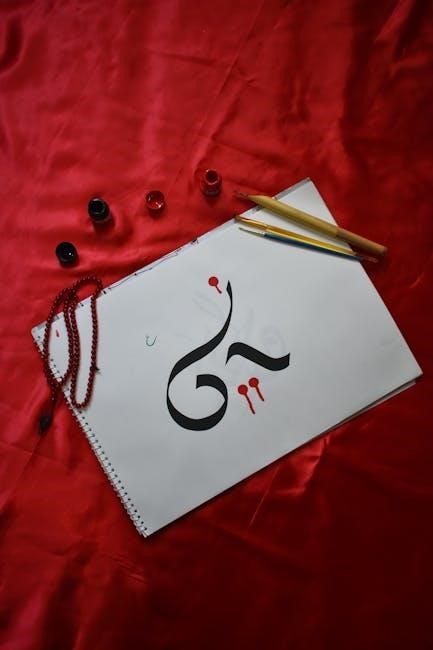
Arabic letter PDF resources encompass diverse formats: charts, tracing worksheets, coloring pages, and flashcards, catering to varied learning styles and skill levels.
Arabic Alphabet Charts in PDF Format
Arabic alphabet charts in PDF format serve as foundational resources for beginners. These charts typically display each letter in its isolated form, alongside its name and a clear representation of its pronunciation. Many charts, like those from Dr. Mamoun Sakkal’s website (sakkal.com), emphasize the right-to-left writing direction with illustrative arrows.
These PDFs often utilize the Naskh script, renowned for its legibility. The charts aren’t merely static displays; they frequently include guidance on stroke order, demonstrating how to form each letter correctly. Some advanced charts may also showcase letter variations depending on their position within a word – initial, medial, or final – providing a comprehensive visual overview of the Arabic alphabet. They are invaluable for initial memorization and understanding the basic building blocks of the language.
Arabic Letter Tracing Worksheets (PDF)
Arabic letter tracing worksheets in PDF format are a cornerstone of early Arabic literacy development. These worksheets provide a hands-on approach to learning, allowing students to physically practice forming each letter. Often, these resources combine tracing exercises with coloring activities, enhancing engagement and reinforcing letter recognition.
Many free Islamic Arabic alphabet worksheets include both Arabic-only and Arabic-English versions, catering to diverse learning needs. They frequently incorporate Islamic words associated with each letter, linking language learning with cultural context. The tracing aspect helps develop muscle memory and improves handwriting skills, while the inclusion of pictures alongside the letters and words aids in vocabulary building and comprehension. These PDFs are excellent for reinforcing concepts learned from alphabet charts.
Arabic Coloring Pages Featuring Letters (PDF)
Arabic coloring pages featuring letters, available in PDF format, offer a playful and engaging method for introducing the Arabic alphabet to young learners. These resources cleverly combine artistic expression with foundational literacy skills. Children can reinforce letter recognition by coloring both the individual Arabic letters and accompanying illustrations, often depicting objects whose names begin with that letter.

Many free Islamic Arabic alphabet coloring/tracing worksheets include an Islamic word for each letter, enriching the learning experience with cultural relevance. The act of coloring enhances fine motor skills and hand-eye coordination, while simultaneously solidifying the visual memory of each letter’s shape; These PDFs are particularly effective for kinesthetic learners who benefit from tactile activities.
Arabic Alphabet Flashcards (PDF)
Arabic alphabet flashcards in PDF format represent a highly versatile and effective learning tool. These digital flashcards allow for convenient study anytime, anywhere, and can be easily printed for traditional, tactile learning. Each card typically features a single Arabic letter, often accompanied by its isolated form, beginning, medial, and final shapes, alongside its corresponding transliteration and pronunciation guidance.
PDF flashcards facilitate quick memorization of letter forms and sounds through repeated exposure. Learners can utilize them for self-testing, partner practice, or interactive games. Some PDFs include accompanying audio files, enabling learners to hear the correct pronunciation of each letter. This multi-sensory approach—visual, auditory, and kinesthetic—significantly enhances learning and retention, making them ideal for all ages.
Key Features to Look for in Arabic Letter PDFs
Essential Arabic letter PDFs prioritize clear Naskh script, pronunciation guides (ideally with audio), transliteration, and potentially, Islamic calligraphy styles for enriched learning.
Clear and Legible Naskh Script
Naskh is the most widely used script for Arabic typography, and for excellent reason. When evaluating Arabic letter PDF resources, prioritizing materials utilizing a clear and legible Naskh script is paramount, especially for beginners. This script’s rounded forms and distinct letter shapes contribute significantly to readability, minimizing confusion as learners grapple with new forms.
Avoid PDFs employing overly stylized or complex scripts initially. A clean Naskh presentation allows students to focus on fundamental letter recognition and proper stroke order. Resources from Dr. Mamoun Sakkal specifically highlight Naskh style, emphasizing its importance for foundational learning. The clarity of the script directly impacts the ease and speed of acquiring Arabic literacy, making it a non-negotiable feature in quality learning materials.
Pronunciation Guides (Audio Integration)
Arabic letter PDF resources are significantly enhanced by integrated audio pronunciation guides. Mastering the sounds of Arabic requires more than just visual recognition; accurate pronunciation is crucial. Look for PDFs that offer accompanying MP3 files or embedded audio clips for each letter and associated words. This allows learners to hear the correct articulation, aiding in proper vocalization and preventing the development of incorrect habits.
Resources offering both Arabic-only and Arabic-English audio, as highlighted in available worksheets, are particularly beneficial. The ability to compare the native pronunciation with transliteration supports comprehension. Audio integration transforms a static PDF into a dynamic learning tool, fostering a more immersive and effective learning experience, ultimately improving fluency.
Islamic Calligraphy Styles Included
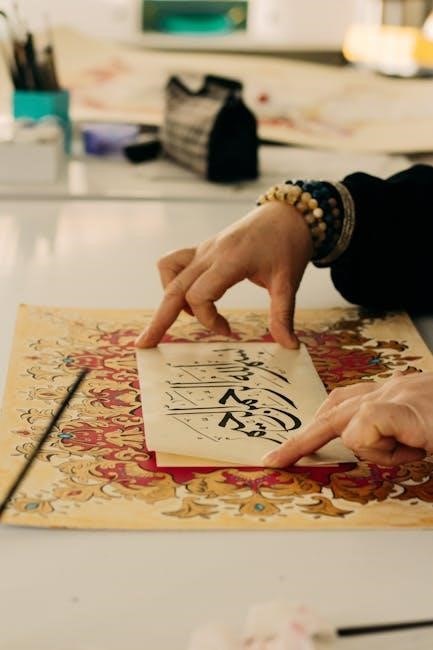
Arabic letter PDF resources can extend beyond basic letterforms by incorporating examples of Islamic calligraphy. Arabic script is deeply intertwined with artistic expression, and exposure to different calligraphic styles – like Naskh, commonly found in charts – enriches the learning process. PDFs showcasing various styles demonstrate the aesthetic beauty of the language and provide cultural context.
While Naskh is often prioritized for readability, exploring other styles like Thuluth or Kufic can deepen appreciation. Resources that illustrate letter variations within different calligraphic traditions offer a more comprehensive understanding. This artistic dimension not only aids memorization but also connects learners to the rich heritage of Arabic language and Islamic art, fostering a more holistic learning experience.
Arabic-English Transliteration
Arabic letter PDF resources are significantly enhanced by the inclusion of Arabic-English transliteration. For beginners, accurately pronouncing Arabic sounds can be challenging due to unfamiliar phonetics. Transliteration provides a bridge, mapping Arabic letters to their closest English sound equivalents, aiding in correct pronunciation and reading comprehension.
Effective PDFs utilize a consistent transliteration system, avoiding ambiguity. Resources offering both the Arabic letter, its name, and a clear transliteration empower learners to independently practice pronunciation. This feature is particularly valuable for self-study. Furthermore, transliteration facilitates vocabulary building and understanding of written text, making the learning process more accessible and efficient for English speakers.

Free vs. Paid Arabic Letter PDF Resources
Arabic letter PDFs range from complimentary introductory materials to comprehensive, paid packages. Free options offer basic practice, while paid resources provide in-depth learning.
Benefits of Free Resources
Arabic letter PDF resources available at no cost present a fantastic entry point for beginners eager to explore the Arabic alphabet. These freely accessible materials often include basic Arabic alphabet charts, providing a visual foundation for recognizing letter shapes and their corresponding sounds. Many free PDFs also incorporate simple tracing worksheets, allowing learners to practice forming the letters correctly, which is crucial given the script’s unique characteristics.
Furthermore, the availability of free Arabic-English transliteration within these PDFs aids in pronunciation, bridging the gap for those unfamiliar with Arabic phonetics. The inclusion of Islamic words alongside each letter introduces cultural context and enhances memorization. These resources are ideal for self-paced learning and offer a low-risk way to determine interest before investing in more comprehensive, paid materials.
Advantages of Paid, Comprehensive PDFs
Arabic letter PDF resources that require purchase typically offer a significantly more in-depth learning experience. Beyond basic alphabet charts and tracing exercises, these comprehensive PDFs often integrate audio pronunciation guides, enabling learners to accurately mimic sounds and improve their speaking skills. Many include a wider range of Islamic calligraphy styles, exposing students to the artistic nuances of Arabic script.
Paid resources frequently delve into the complexities of diacritical marks (Harakat) and letter ligatures, crucial for accurate reading and writing. The structured progression and detailed explanations found in these PDFs cater to serious learners aiming for fluency. Moreover, high-quality PDFs often boast professional design and clear Naskh script, enhancing readability and overall learning effectiveness, providing a substantial advantage over free alternatives.

Utilizing Arabic Letter PDFs for Effective Learning
Arabic letter PDFs excel when combined with varied practice – tracing, coloring, and audio repetition. Linking letters to Islamic words deepens understanding and memorization.
Starting with Basic Letter Shapes
Arabic letter PDF resources are most effective when learners begin with foundational letterforms. Initial focus should be on recognizing and replicating the distinct shapes of each letter, independent of joining. Many PDFs, particularly those designed for beginners, present letters individually, often with directional arrows illustrating the correct stroke order;
This methodical approach builds muscle memory and a strong visual understanding. Tracing worksheets within these PDFs are invaluable at this stage, allowing for repeated practice. Prioritize mastering the core shape before attempting to connect letters. Consistent practice with basic shapes, utilizing the visual guidance provided in Arabic letter PDFs, establishes a solid base for further learning and prevents the development of incorrect writing habits.
Practicing Pronunciation with Audio
Many comprehensive Arabic letter PDF resources now integrate audio components, significantly enhancing the learning experience. Correct pronunciation is crucial, and simply recognizing letter shapes isn’t enough. Audio files, often available as MP3s accompanying the PDFs, allow learners to hear native speakers articulate each letter’s sound clearly.
This is particularly helpful for sounds that don’t exist in English. Learners should actively listen and imitate, repeating the sounds until they feel comfortable. Some PDFs even include audio for words containing the target letter, providing contextual pronunciation practice; Utilizing these audio resources alongside visual Arabic letter PDFs creates a multi-sensory learning approach, accelerating pronunciation skills and building confidence.
Combining Tracing and Coloring Activities
Arabic letter PDF worksheets frequently incorporate tracing and coloring exercises, offering a kinesthetic and visually engaging learning method. Tracing helps develop muscle memory, solidifying the correct formation of each letter. Simultaneously, coloring the letters and associated images adds an element of fun and reinforces visual recognition.
These activities are particularly beneficial for younger learners or those who prefer hands-on learning. The combination caters to different learning styles, making the process more effective and enjoyable. Many resources include Islamic words alongside the letters, allowing learners to connect the script with meaningful vocabulary while practicing both tracing and coloring within the Arabic letter PDF.
Learning Islamic Words Associated with Each Letter
Many Arabic letter PDF resources thoughtfully integrate Islamic vocabulary alongside each letter of the alphabet. This approach enriches the learning experience, connecting the script to culturally relevant and meaningful terms. Learners aren’t just memorizing shapes; they’re simultaneously acquiring words related to faith and daily life, fostering a deeper understanding of the language’s context.
These PDFs often include pictures alongside the words, further aiding comprehension and retention. This method is particularly effective for beginners, providing a practical application for newly learned letters. By associating each letter with an Islamic term, learners build a foundation for reading and understanding basic religious texts, enhancing the value of the Arabic letter PDF.

Resources for Downloading Arabic Letter PDFs (as of 01/01/2026)
Arabic letter PDFs are readily available on websites like sakkal.com, offering charts and worksheets. Online stores also provide comprehensive, paid learning materials.
Websites Offering Free Arabic Alphabet Charts
Several online platforms generously provide free Arabic alphabet charts in PDF format, serving as excellent starting points for beginners. Dr. Mamoun Sakkal’s website, sakkal.com, is a prominent resource, offering a chart in the clear Naskh style, a foundational script for learning. These charts typically illustrate each letter’s isolated form, initial, medial, and final shapes, accompanied by directional arrows to guide proper stroke order.
These free resources often emphasize right-to-left writing, a crucial aspect of the Arabic language. While the quality and comprehensiveness can vary, these websites offer a convenient and cost-effective way to familiarize oneself with the basic forms of the Arabic letters. Users can readily download and print these charts for offline practice, making them incredibly accessible for self-directed learners.
Platforms Providing Arabic Letter Worksheets
Numerous platforms specialize in offering Arabic letter worksheets in PDF format, designed to reinforce learning through practical application. These worksheets frequently incorporate coloring and tracing activities, catering to diverse learning styles and age groups. Many resources, like those offering Islamic Arabic Alphabet Colouring/Tracing Worksheets, include an Islamic word associated with each letter, enriching vocabulary alongside script mastery.
These PDFs often provide both Arabic-only and Arabic-English versions, aiding comprehension for non-native speakers. Furthermore, some platforms bundle audio MP3 files to support pronunciation and memorization. The availability of these combined resources – visual, kinesthetic, and auditory – significantly enhances the learning experience, making worksheet practice a highly effective method for mastering the Arabic alphabet.
Online Stores Selling Comprehensive Arabic Learning PDFs
Several online stores specialize in curated Arabic learning materials, offering comprehensive PDF packages that extend beyond basic letter recognition. These often include detailed alphabet charts (typically in Naskh script, following directional arrows for proper formation), alongside extensive tracing and writing practice. Paid resources frequently boast higher production quality and more structured lesson plans.
These comprehensive PDFs may also incorporate diacritical marks (Harakat) guides, ligature explanations, and variations in letter forms. Some stores provide bundled packages with audio pronunciation guides, enhancing the learning experience. While requiring an investment, these resources offer a more in-depth and systematic approach to mastering the Arabic alphabet, suitable for serious learners seeking a complete foundation.
Advanced Arabic Letter Learning Resources (PDF)
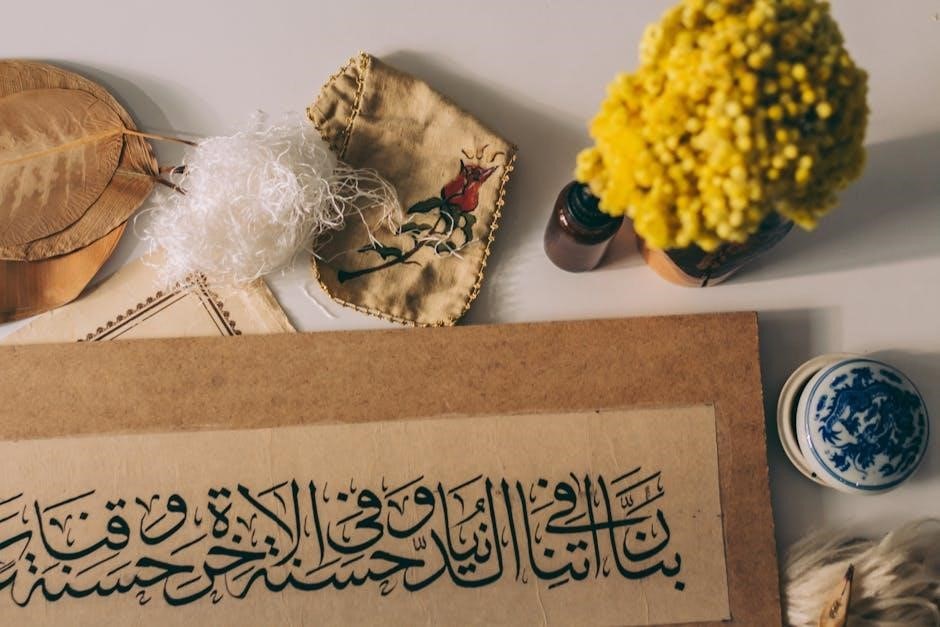
Advanced Arabic letter PDFs delve into Harakat (diacritical marks) and complex ligatures, offering detailed explanations of letter variations for fluent reading.
Diacritical Marks (Harakat) in PDF Guides
Arabic Harakat, or diacritical marks, are crucial for accurate pronunciation and understanding the nuances of the Arabic language. PDF guides dedicated to these marks are invaluable resources for intermediate and advanced learners. These guides typically detail each Haraka – Fatha, Kasra, Damma, Sukoon, Shadda, and others – explaining their phonetic values and how they alter the sound of a letter.
Effective PDF resources will not only visually represent each mark but also provide audio pronunciations, allowing learners to connect the symbol with its corresponding sound. Furthermore, they often include exercises where learners practice identifying and applying Harakat to different letters and words. Some comprehensive PDFs even explain the subtle differences in pronunciation based on regional dialects. Mastering Harakat is essential for reading the Quran and understanding classical Arabic texts, making these PDF guides a vital component of any serious Arabic learning journey.
Ligatures and Letter Variations Explained
Arabic script features numerous ligatures and letter variations depending on their position within a word – initial, medial, final, or isolated. PDF resources focusing on these complexities are essential for achieving fluency in reading and writing. These guides meticulously illustrate how letters change shape when connected, showcasing common ligatures like laam-alif (لا) and yaa-nooon (ين).
Comprehensive PDFs will categorize these variations, providing clear visual examples and explanations of the rules governing their formation. They often include practice exercises where learners identify and correctly write letters in different positions. Understanding these nuances is critical for deciphering Arabic text accurately and producing legible handwriting. Advanced PDFs may also cover less common variations and historical script styles, offering a deeper understanding of the evolution of Arabic calligraphy and typography.