Samsung RFG298HDRS Owners Manual: Comprehensive Guide
This detailed guide provides essential information for Samsung RFG298HDRS refrigerator owners‚ covering operation‚ maintenance‚ troubleshooting‚ and access to service resources.
Find parts diagrams‚ service manuals‚ and repair assistance through Appliantology and PartSelect‚ ensuring optimal performance and longevity of your appliance.
Welcome to the comprehensive guide for your Samsung RFG298HDRS refrigerator! This model‚ along with related series like RFG297HDWP and RFG296HD‚ represents Samsung’s commitment to innovative and reliable refrigeration technology. This manual is designed to equip you with all the necessary information to maximize your refrigerator’s performance and lifespan.
The RFG298HDRS is a feature-rich appliance offering convenient functionalities such as an external ice and water dispenser‚ advanced temperature controls‚ and spacious interior organization. Understanding its features and proper operation is key to enjoying years of dependable service. This guide will walk you through everything from initial setup and daily use to maintenance procedures and troubleshooting common issues.
Resources like Appliantology.org and PartSelect.com provide valuable supplementary information‚ including service manuals and parts diagrams‚ to further assist you in maintaining your refrigerator.
Understanding the Model Numbers (RFG298HDRS & Related Series)
Samsung utilizes a specific nomenclature for its refrigerator models‚ providing insight into features and variations. The RFG298HDRS is a primary model‚ but understanding related series – RFG297HDWP‚ RFG298HDWP‚ RFG296HD‚ and RFG29PHD – is crucial for parts compatibility and accessing relevant documentation.
Variations within these series‚ such as RFG296HDPN‚ RFG297HD‚ RFG297HDBP‚ and RFG298HDBP‚ often indicate minor differences in color‚ finish‚ or specific feature sets. The “RFG” designates a French Door Refrigerator‚ while subsequent numbers and letters detail size‚ features‚ and regional specifications.
When searching for parts or manuals‚ referencing the complete model number is essential for accuracy. Resources like the Internet Archive and PartSelect.com catalog numerous models‚ ensuring you find the correct information for your specific refrigerator configuration.
Safety Precautions and Warnings
Prioritize safety when operating your Samsung RFG298HDRS refrigerator. Always disconnect the power supply before cleaning or performing maintenance to avoid electrical shock. Do not use flammable sprays or solvents near the appliance‚ as they pose a fire hazard.
Proper grounding is essential; never alter the power cord or plug. Ensure the refrigerator is placed on a level surface to prevent instability. Keep ventilation openings clear of obstructions to ensure efficient operation and prevent overheating.
Exercise caution when handling the ice and water dispenser‚ avoiding direct contact with moving parts. Supervise children around the appliance and instruct them on safe usage. Refer to the full owner’s manual for comprehensive safety guidelines and warnings.

Refrigerator Features & Components
Explore the RFG298HDRS’s design‚ including its exterior dispenser‚ interior shelving‚ drawers‚ and bins‚ alongside the integrated ice and water dispensing system.
Exterior Features: Dispenser‚ Controls‚ and Doors
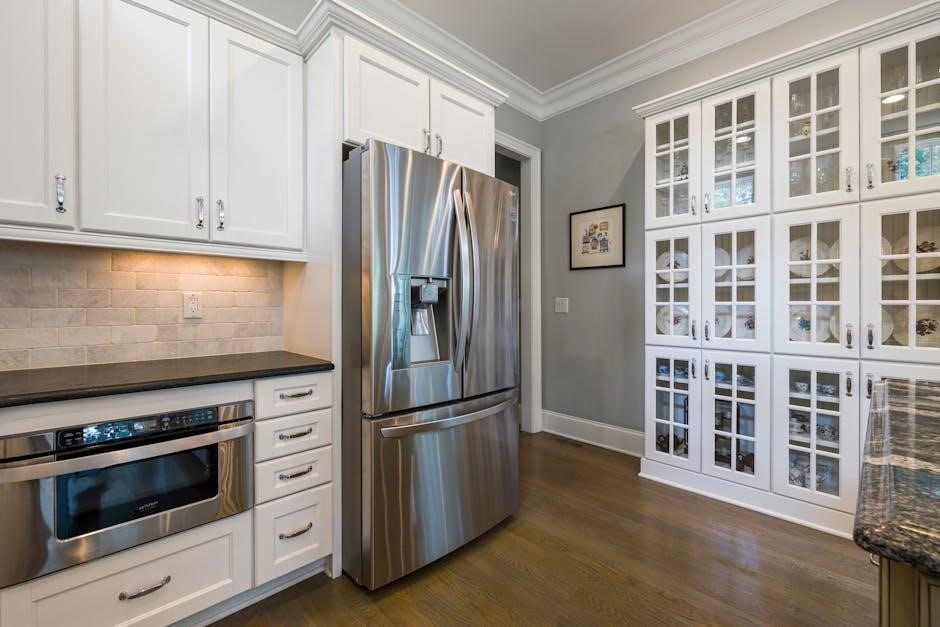
The Samsung RFG298HDRS boasts a sleek exterior designed for convenience and modern aesthetics. Its prominent feature is the integrated dispenser‚ providing chilled water and ice on demand. This dispenser includes customizable settings for both cubed and crushed ice. The control panel‚ typically located on the dispenser area‚ allows for precise temperature adjustments for both the refrigerator and freezer compartments.
Door features include robust construction with ergonomic handles for easy opening and closing. Many models incorporate door alarms to alert users if left ajar‚ conserving energy. Exterior lighting illuminates the dispenser area and potentially the surrounding kitchen space. The doors are designed to accommodate various items‚ with adjustable door bins offering flexible storage solutions. Understanding these exterior components is crucial for maximizing the refrigerator’s functionality and user experience.
Interior Features: Shelves‚ Drawers‚ and Bins
The RFG298HDRS interior is engineered for optimal food preservation and organization. Adjustable shelves‚ often made of tempered glass‚ provide versatile storage space for items of varying heights. Multiple drawers are dedicated to specific food types – crisper drawers maintain humidity for produce‚ while deli drawers are ideal for meats and cheeses.
Door bins offer convenient access to frequently used items like condiments and beverages. Full-width bins maximize space for larger platters or containers. Some models feature a foldable shelf to accommodate taller items when needed. LED lighting brightly illuminates the interior‚ enhancing visibility. Proper arrangement of these interior components ensures efficient use of space and maintains optimal airflow for consistent cooling.
Ice and Water Dispenser System Overview
The RFG298HDRS boasts a convenient through-the-door ice and water dispenser. This system utilizes a water line connection and an internal ice maker. Water filtration is a key component‚ ensuring clean and refreshing drinking water. The ice maker produces both cubed and crushed ice‚ selectable via the dispenser controls.
Regular filter replacement is crucial for maintaining water quality and dispenser performance. The dispenser features child safety locks to prevent accidental activation. Troubleshooting common issues‚ such as low ice production or water flow problems‚ is addressed in the maintenance section. External water lines should be inspected periodically for leaks or damage‚ ensuring reliable operation.
Operating Instructions
Proper operation involves initial setup‚ temperature adjustments‚ and utilizing the ice and water dispenser. Follow these guidelines for optimal performance and longevity.
Initial Setup and Powering On
Before first use‚ carefully inspect the refrigerator for any shipping damage. Ensure the appliance is placed on a level surface‚ allowing adequate ventilation around the sides and back – typically a few inches is recommended.
Connect the water line to the refrigerator’s water inlet valve‚ following the provided instructions to prevent leaks. Once connected‚ flush the water line for several minutes to remove any air or impurities.
Plug the refrigerator into a dedicated‚ grounded electrical outlet. Avoid using extension cords. Allow the refrigerator to run for at least 24 hours to reach its optimal operating temperature before loading with food. During this initial period‚ the ice maker will begin its first cycle‚ discarding the initial batch of ice.
Verify the temperature settings are appropriate for your needs‚ and familiarize yourself with the control panel functions.
Temperature Control Settings (Refrigerator & Freezer)
The RFG298HDRS utilizes electronic controls for precise temperature management. The refrigerator temperature can typically be adjusted between 34°F and 45°F (1°C and 7°C)‚ while the freezer operates optimally between -4°F and 5°F (-20°C and -15°C).
To adjust temperatures‚ use the control panel buttons to increase or decrease the set points. Allow 24 hours for the refrigerator to stabilize after any temperature adjustments. Note that frequent door openings can affect internal temperatures.
Consider using the ‘Power Cool’ or ‘Power Freeze’ functions for rapid cooling or freezing of items. These modes temporarily lower the temperature‚ then return to the set point automatically. Monitor food storage guidelines to ensure proper preservation.
Regularly check the actual temperatures with a thermometer to verify accurate settings.
Using the Ice Maker
The RFG298HDRS ice maker produces crescent-shaped ice automatically. Ensure the ice maker is turned ‘ON’ via the control panel. It typically takes up to 24 hours for initial ice production‚ discarding the first few batches.
A water supply connection is essential for ice maker operation. Verify the water line is properly connected and the water supply valve is fully open. The ice maker will stop producing ice if the ice bin is full or if a water supply issue exists.
To temporarily stop ice production‚ use the ‘Ice Maker’ button on the control panel. For extended periods of non-use‚ consider turning the ice maker off to conserve water and energy.
Regularly clean the ice bin and surrounding areas to maintain hygiene.
Using the Water Dispenser
The RFG298HDRS water dispenser provides filtered water on demand. To dispense water‚ firmly press your glass against the dispenser paddle. The amount of water dispensed is controlled by how long you hold the paddle.
Ensure the water supply is connected and the valve is open for proper function. A water filter is crucial for clean‚ great-tasting water; replace it every six months or as indicated by the filter indicator light.
To lock the dispenser‚ press and hold the ‘Lock’ button on the control panel. This prevents accidental dispensing‚ especially useful for households with children.
Regularly wipe the dispenser area to maintain cleanliness and prevent bacterial growth.

Maintenance & Care
Regular cleaning and upkeep are vital for optimal performance. This includes interior/exterior cleaning‚ water filter replacements‚ and condenser coil maintenance.
Cleaning the Interior
To maintain a hygienic refrigerator‚ regular interior cleaning is essential. Begin by disconnecting the power supply to prevent any electrical hazards. Remove all food items‚ shelves‚ drawers‚ and bins. Wash these removable parts with warm‚ soapy water‚ then rinse thoroughly and dry completely before replacing them.
For the refrigerator’s interior surfaces‚ use a mild detergent solution and a soft cloth. Avoid abrasive cleaners‚ as they can damage the finish. Pay close attention to spills and stains‚ cleaning them promptly to prevent lingering odors or discoloration. Rinse the surfaces with clean water and dry with a soft cloth.
A baking soda solution (1 tablespoon baking soda to 1 quart of water) can be used to neutralize odors. Ensure all surfaces are completely dry before returning food items to the refrigerator.
Cleaning the Exterior
Maintaining the exterior of your Samsung RFG298HDRS refrigerator enhances its appearance and protects the finish. Begin by unplugging the appliance for safety. Use a mild detergent and warm water to clean the doors‚ sides‚ and top of the refrigerator. A soft cloth or sponge is recommended to avoid scratching the surface.
For stainless steel models‚ use a stainless steel cleaner specifically designed for appliances‚ following the manufacturer’s instructions. Wipe in the direction of the grain to prevent streaks. Avoid abrasive cleaners‚ scouring pads‚ or steel wool‚ as these can cause permanent damage.
The dispenser area should be wiped down regularly with a damp cloth to remove spills and fingerprints. Rinse with clean water and dry thoroughly. Ensure no water enters the dispenser openings.
Replacing the Water Filter
Regular water filter replacement is crucial for maintaining clean‚ fresh-tasting water and ice. Samsung recommends replacing the filter every six months‚ or sooner if water flow decreases noticeably. Locate the filter‚ typically inside the refrigerator compartment‚ often in the upper-right corner.
To replace the filter‚ gently turn the existing filter counterclockwise and pull it out. Align the new filter with the housing and push it in‚ then turn clockwise until it locks into place. Flush the system by dispensing water for approximately five minutes to remove any air or debris.
Reset the filter indicator on the control panel according to the owner’s manual instructions to ensure accurate monitoring. Using genuine Samsung filters guarantees optimal performance and water quality.
Cleaning the Condenser Coils
Maintaining clean condenser coils is vital for efficient refrigerator operation. Located on the back or underneath the unit‚ these coils dissipate heat. Dust and debris accumulation reduces cooling performance and increases energy consumption.
Before cleaning‚ unplug the refrigerator. Use a vacuum cleaner with a brush attachment to gently remove dust from the coils. Avoid bending or damaging the coils during cleaning. For stubborn dirt‚ a condenser coil brush can be used carefully.
Regular cleaning‚ ideally every six to twelve months‚ ensures optimal cooling and extends the refrigerator’s lifespan; Reconnect the power after cleaning and monitor performance.

Troubleshooting Common Issues
This section addresses frequent problems like cooling failures‚ ice maker malfunctions‚ water dispenser issues‚ and unusual noises‚ offering solutions for your RFG298HDRS.
Refrigerator Not Cooling
If your Samsung RFG298HDRS refrigerator isn’t cooling‚ begin by verifying the power supply and ensuring the temperature controls are correctly set. Check if the condenser coils are clean‚ as dust buildup restricts airflow and reduces efficiency. A blocked evaporator fan motor can also cause cooling problems; listen for its operation.
Inspect the door seals for any gaps or damage‚ preventing cold air from escaping. Confirm the damper control between the freezer and refrigerator is functioning correctly‚ allowing proper air circulation. If these checks don’t resolve the issue‚ a potential refrigerant leak or a faulty compressor may require professional service. Refer to the service manual for diagnostic codes and further assistance.
Remember to avoid overloading the refrigerator‚ as this hinders airflow. Regularly cleaning the interior also helps maintain optimal cooling performance.
Ice Maker Not Producing Ice
If your Samsung RFG298HDRS ice maker isn’t working‚ first ensure the ice maker is turned ‘on’ in the refrigerator’s settings. Verify the water supply line is connected and the water valve is fully open‚ allowing water to reach the ice maker. A frozen water line can also prevent ice production; check for ice blockages.
Inspect the ice bin for any obstructions or a full bin preventing further ice production. Confirm the freezer temperature is sufficiently cold (below 0°F) for optimal ice making. If the issue persists‚ a faulty ice maker module or water inlet valve may be the cause‚ requiring professional diagnosis and repair.
Consult the service manual for specific troubleshooting steps and error codes related to the ice maker system.
Water Dispenser Not Working
If the water dispenser on your Samsung RFG298HDRS isn’t functioning‚ begin by checking if the water supply line is properly connected and the water valve is fully open. A frozen water line is a common culprit; inspect for ice blockages restricting water flow. Ensure the water filter isn’t excessively clogged‚ as this significantly reduces water pressure.
Verify the dispenser lock feature isn’t activated‚ preventing water dispensing. If the problem continues‚ a faulty water inlet valve or dispenser motor could be the issue‚ necessitating professional attention. Consult the service manual for detailed troubleshooting steps and potential error codes.
Replacing the water filter regularly is crucial for optimal dispenser performance.
Unusual Noises
Hearing strange sounds from your Samsung RFG298HDRS refrigerator? Several factors could be responsible. A rattling noise might indicate loose items on shelves or in bins – ensure everything is securely placed. Buzzing sounds often stem from the compressor or condenser fan motor; check for obstructions hindering fan operation.
Clicking noises could signal the defrost timer or relay switch engaging. If you hear a high-pitched squealing‚ it might be a worn-out evaporator fan motor. Consult the service manual for diagnostic codes and component locations. Ignoring unusual noises can lead to more significant‚ costly repairs.
Regular maintenance can help prevent many noise-related issues.
Parts & Diagrams
Access detailed parts diagrams and identify key replacement components for your RFG298HDRS via Repair Clinic and PartSelect‚ simplifying maintenance and repairs.
Accessing Parts Diagrams
Locating parts diagrams for your Samsung RFG298HDRS refrigerator is crucial for successful repairs and maintenance. Several online resources provide these valuable visual guides. Repair Clinic offers an extensive library of exploded views‚ clearly illustrating how components fit together. These diagrams are often interactive‚ allowing you to click on parts to identify them and check their availability.
PartSelect is another excellent source‚ providing detailed diagrams alongside a comprehensive parts list. ManualsLib‚ while primarily a source for owner’s manuals‚ sometimes includes basic parts breakdowns. Remember to verify the diagram matches your specific model number (RFG298HDRS) to ensure accuracy. Utilizing these resources empowers you to confidently tackle repairs‚ saving time and potentially reducing repair costs.
Always disconnect power before attempting any repairs!
Identifying Key Replacement Parts
Common replacement parts for the Samsung RFG298HDRS include the water filter (HAF-CIN/EXP)‚ ice maker assembly‚ dispenser ducts‚ and door bins. Repair Clinic and PartSelect categorize parts by location within the refrigerator‚ simplifying the search process. Identifying the correct part number is vital; cross-reference with your model number (RFG298HDRS) to avoid compatibility issues.
Frequently failing components are the defrost heater‚ defrost thermostat‚ and fan motors. When diagnosing issues‚ note the specific part exhibiting malfunction. Samsung’s OEM parts generally ensure optimal performance‚ though compatible aftermarket options are available. Always prioritize safety and disconnect power before replacing any component. Accurate identification prevents unnecessary returns and ensures a successful repair.
Consult diagrams for precise location!
Where to Purchase Replacement Parts
Several online retailers specialize in Samsung refrigerator parts‚ including PartSelect‚ Repair Clinic‚ and eManuals.com. PartSelect offers a dedicated RFG298HDRS parts finder‚ streamlining the selection process. Repair Clinic provides detailed diagrams and troubleshooting resources alongside parts sales. eManuals.com offers downloadable service manuals‚ aiding in accurate part identification.
Samsung’s official parts website is another option‚ guaranteeing genuine OEM components. Local appliance parts stores may also stock common replacements. Compare prices and shipping costs across vendors before purchasing. Ensure the retailer offers a return policy in case of incorrect part selection. Verify compatibility with your RFG298HDRS model number before finalizing your order.
Always double-check compatibility!
Service Manual Information
Accessing the service manual is crucial for detailed repairs; resources like Appliantology and ManualsLib provide downloadable versions for the RFG298HDRS model.

Locating the Service Manual
Finding the service manual for your Samsung RFG298HDRS refrigerator is a vital step when tackling more complex repairs beyond basic troubleshooting. Several online resources offer downloadable versions of this essential document. Appliantology.org hosts a dedicated forum where users frequently share service manuals‚ including one specifically for the RFG298HDRS – a valuable community resource.
ManualsLib.com is another excellent source‚ providing a readily accessible copy of the RFG298HDRS service manual. Additionally‚ emanuals.com offers instant access to download service manuals‚ including the one for this specific Samsung model. These manuals contain detailed schematics‚ wiring diagrams‚ and component lists‚ empowering both experienced technicians and confident DIYers to diagnose and resolve issues effectively. Remember to verify the manual’s compatibility with your exact model number for accurate information.
Understanding Service Codes
Samsung refrigerators‚ including the RFG298HDRS‚ utilize diagnostic service codes to pinpoint the source of malfunctions. These codes are displayed on the refrigerator’s control panel or accessed through diagnostic modes‚ providing technicians (and informed owners) with crucial information about the issue. While a comprehensive list isn’t publicly available without the full service manual‚ understanding the concept is key.
Service codes often relate to specific components or systems – for example‚ a code might indicate a faulty temperature sensor‚ a compressor issue‚ or a problem with the ice maker. The service manual details the meaning of each code‚ guiding repair efforts. Deciphering these codes allows for targeted troubleshooting‚ saving time and preventing unnecessary part replacements. Accessing the Appliantology forum can also provide insights from experienced technicians who have encountered and resolved similar code-related problems.
Appliantology Forum Resources
The Appliantology.org forum is an invaluable resource for owners of the Samsung RFG298HDRS refrigerator. Dedicated threads specifically address this model‚ offering a platform for sharing repair experiences‚ troubleshooting tips‚ and access to service manuals. Users frequently post questions and receive assistance from experienced appliance technicians and fellow owners.

A key benefit is the availability of shared knowledge regarding common issues and effective solutions. The forum provides a space to discuss diagnostic codes‚ locate replacement parts‚ and understand complex repair procedures. Searching the forum using keywords like “RFG298HDRS” or specific error codes can quickly yield relevant information. It’s a community-driven approach to appliance repair‚ often bypassing the need for costly service calls.
Technical Specifications
Key specs include dimensions‚ weight‚ energy consumption details‚ and the refrigerant type used in the Samsung RFG298HDRS refrigerator for performance insight.
Dimensions and Weight
Understanding the physical specifications of your Samsung RFG298HDRS refrigerator is crucial for proper placement and installation within your kitchen space. While precise dimensions can vary slightly depending on specific configurations‚ the typical overall dimensions are approximately 35.5 inches wide‚ 70.2 inches high‚ and 35.7 inches deep‚ without the door handles.
With handles‚ the total depth increases to around 36.5 inches. The refrigerator’s weight‚ when empty‚ is approximately 291 pounds. These measurements are vital when planning for delivery‚ maneuvering through doorways‚ and ensuring adequate ventilation around the appliance. Always consult the official Samsung documentation for the most accurate and up-to-date specifications for your particular model variant.
Properly accounting for these dimensions prevents installation issues and ensures optimal refrigerator performance.
Energy Consumption
The Samsung RFG298HDRS refrigerator is designed with energy efficiency in mind‚ though actual consumption varies based on usage patterns and environmental factors. Typically‚ this model has an estimated yearly energy consumption of around 688 kWh. This translates to an approximate annual operating cost of $82‚ based on a national average electricity cost of 11.9 cents per kWh.
Energy Star certification status should be verified on the Energy Star website for the most current information‚ as ratings can change. Factors influencing energy use include door opening frequency‚ temperature settings‚ and ambient room temperature.
Optimizing settings and minimizing door openings can help reduce energy consumption and lower your electricity bill.
Refrigerant Type
The Samsung RFG298HDRS refrigerator utilizes R-600a as its refrigerant. This is a hydrocarbon refrigerant‚ specifically isobutane‚ known for its significantly lower global warming potential (GWP) compared to older refrigerants like R-134a. R-600a is a more environmentally friendly option‚ contributing to a reduced carbon footprint.
It’s important to note that R-600a is also flammable‚ so any service or repair involving the refrigerant system should only be performed by a qualified and certified appliance technician. Attempting to service the refrigerant system yourself could pose a safety hazard.
Proper handling and disposal of R-600a are crucial to maintain environmental safety and adhere to regulations.