Nail Technician Exam Study Guide PDF: Comprehensive Plan
Embark on a focused journey! This guide provides essential resources, practice questions, and detailed explanations to confidently navigate your nail technician certification exam preparation.
Preparing for the nail technician exam requires dedication and a strategic approach. This exam assesses your knowledge of nail anatomy, chemistry, sanitation, and practical skills essential for a successful career. A comprehensive study guide, often available in PDF format, is an invaluable tool. These guides consolidate crucial information, offering a structured learning path.
Successfully passing this exam unlocks professional opportunities, allowing you to provide safe and effective nail services. Resources like “Nail Technology Theory Practice Exam” with 150 questions, alongside answer keys, are designed to simulate the real testing environment. Understanding the exam’s scope and utilizing quality study materials are key to achieving a passing score and launching your career as a licensed nail technician.
II. Exam Structure and Format
The Nail Technician exam is meticulously structured to evaluate your competency. It’s divided into two primary sections: Scientific Concepts and Nail Technology Procedures, totaling 110 questions within a 90-minute timeframe. The Scientific Concepts section, a written exam, comprises 44 multiple-choice questions, further broken down into subsections.
Familiarizing yourself with this format is crucial. Study guides, like those offering 150 practice questions and detailed explanations, help you adapt to the question types and time constraints. Understanding the weighting of each section allows for focused study. Mastering both theoretical knowledge and practical application, as assessed by the exam, is vital for success and a thriving career in the nail industry.
A. Scientific Concepts Section
This section rigorously tests your foundational knowledge. Expect 44 multiple-choice questions covering crucial scientific principles relevant to nail technology. Key areas include nail disorders and diseases – recognizing conditions like hangnails, pterygium, onychophagy, and onychorrhexis – and a thorough understanding of sanitation and disinfection procedures.
You’ll need to demonstrate knowledge of chemical interactions, such as identifying substances as abrasives, bleaches, lubricants, or astringents. Practice questions focusing on these concepts are invaluable. A strong grasp of nail anatomy and physiology, including nail structure, growth, and metabolism, is also essential. Effective study guides will provide detailed explanations to solidify your understanding of these core scientific principles.
B. Nail Technology Procedures Section
This portion assesses your practical skills and knowledge application. The Nail Technology Procedures section comprises the remaining portion of the 110 exam questions, evaluating your proficiency in core techniques. Expect questions related to classic manicure procedures – shaping nails, softening cuticles, cleaning under the free edge, and removing polish – and comprehensive pedicure techniques and protocols.
A significant focus lies on artificial nail applications, specifically acrylic and gel nail application methods. Understanding proper product usage, safety protocols, and client consultation are vital. Practice exams should include scenarios requiring you to choose the correct procedure or identify potential errors. Mastering these procedures, alongside a solid theoretical foundation, is key to exam success.
III. Core Scientific Concepts
A strong grasp of scientific principles is fundamental for a nail technician. This section, containing 44 multiple-choice questions, tests your understanding of nail disorders and diseases – recognizing conditions like hangnails, pterygium, onychophagy, and onychorrhexis, as well as identifying abnormal grooves. Crucially, a thorough knowledge of sanitation and disinfection procedures is essential, ensuring client safety and preventing the spread of infection.
Expect questions assessing your ability to differentiate between abrasives, bleaches, lubricants, and astringents. Understanding how these impact nail health is vital. This section demands not just memorization, but the ability to apply scientific concepts to real-world scenarios encountered in a salon environment.
A. Nail Disorders and Diseases
Accurate identification of nail disorders is paramount for professional practice. The exam will assess your ability to recognize common conditions such as hangnails – damage to the cuticle – and pterygium, an overgrowth of the cuticle onto the nail plate. You must also understand onychophagy (nail biting) and onychorrhexis (vertical ridges or splits), differentiating them from normal nail variations.
Be prepared to identify abnormal nail conditions, including recognizing the causes and symptoms of various diseases affecting the nails; Knowing when to refer a client to a medical professional is crucial. This section requires detailed observation skills and a solid understanding of nail pathology, ensuring you provide safe and appropriate services.

B. Sanitation and Disinfection Procedures
Maintaining a sterile and hygienic workspace is non-negotiable in nail technology. The exam heavily emphasizes your knowledge of proper sanitation and disinfection protocols. You’ll be tested on differentiating between cleaning, sanitizing, and disinfecting, understanding the appropriate contact times for disinfectants, and knowing which tools require specific procedures.
Expect questions regarding the correct storage of implements – in clean, closed containers – and the importance of handwashing. A thorough grasp of infection control principles is vital to prevent the spread of bacteria, viruses, and fungi. Demonstrating a commitment to client safety through meticulous sanitation practices is key to passing this section and building a successful career.
IV. Nail Anatomy and Physiology
A solid understanding of nail structure and function is foundational to success. This section assesses your knowledge of the nail unit’s components – from the matrix and nail plate to the hyponychium and cuticle. You must be able to identify and explain the role of each part in nail growth and overall health.
The exam will explore nail metabolism, including how nutrients impact nail development. Be prepared to recognize common nail conditions related to anatomical abnormalities. Knowing the difference between onychophagy (nail biting) and onychorrhexis (nail splitting) is crucial. Mastering this anatomy will enable you to accurately assess nail health, diagnose potential issues, and provide appropriate services.
A. Understanding Nail Structure
Delve into the intricate architecture of the nail unit! This involves recognizing key components like the nail matrix – responsible for nail growth – the nail plate, providing protective coverage, and the nail bed, supporting the plate. Understanding the cuticle’s role in sealing the nail matrix against infection is vital.
You’ll need to differentiate between the hyponychium (skin under the free edge) and the lunula (the half-moon shape). Be prepared to identify structures like the pterygium, a tissue connecting the cuticle to the nail plate. Knowing how these parts interact is essential for performing services safely and effectively, and for recognizing abnormalities. A thorough grasp of nail structure is paramount for exam success.
B. Nail Growth and Metabolism
Explore the fascinating biology behind nail development! Nail growth originates in the matrix, with cells dividing and keratinizing as they move forward. Understanding the average growth rate – approximately 0.1 mm per day – is crucial. Factors influencing growth, such as nutrition, circulation, and systemic health, must be considered.

Metabolism plays a key role, as nails require nutrients for healthy development. Deficiencies can manifest as ridges, discoloration, or slow growth. Hormonal influences and age also impact nail metabolism. Knowing how these factors interact allows you to advise clients on nail health and identify potential underlying issues. Mastering this knowledge is essential for comprehensive client care and exam preparedness.
V. Manicure and Pedicure Techniques
Master the art of nail enhancement and care! This section details classic manicure procedures, including proper hand sanitation, cuticle care (softening, pushing, and nipping – when appropriate and legally permissible), shaping, and polish application. Learn to identify various nail shapes and their suitability for different clients.
Pedicure protocols emphasize foot sanitation, callus treatment, cuticle care, and massage techniques. Understanding contraindications for both services is vital. Proper draping, tool sanitation, and client consultation are paramount. Proficiency in these techniques demonstrates professionalism and ensures client safety. Practice these skills diligently to excel on the exam and build a successful career.
A. Classic Manicure Procedures
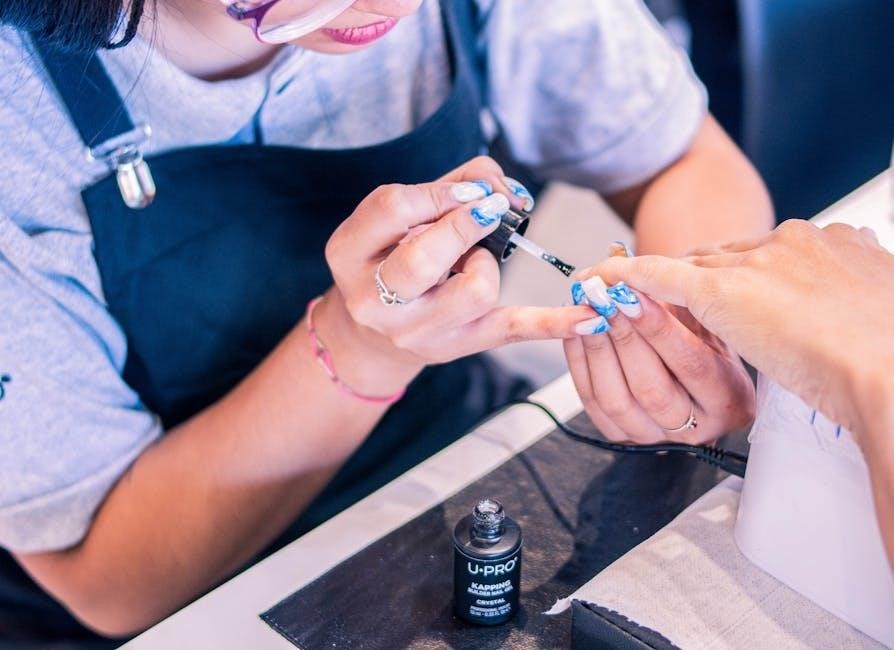
Delve into the foundational steps of a classic manicure! Begin with a thorough hand washing and sanitation, followed by removing existing polish. Proper nail shaping is crucial – mastering square, round, oval, and almond shapes is key. Cuticle care involves softening with a cuticle remover, gently pushing back, and carefully trimming (following state regulations).
A relaxing hand massage stimulates circulation and enhances the client experience. Finally, polish application requires a base coat, two color coats, and a top coat for lasting shine. Remember to clean under the free edge and avoid polish on the skin. Understanding the purpose of each step – shaping, softening, cleaning – is vital for exam success.
B. Pedicure Techniques and Protocols

Master the art of a safe and rejuvenating pedicure! Begin with a client consultation and foot soaking to soften skin. Proper nail trimming and shaping are essential, mirroring manicure techniques. Cuticle care follows, prioritizing gentle pushing back and trimming. Addressing calluses requires safe and effective methods, avoiding excessive removal.
A thorough foot scrub exfoliates, while a moisturizing massage promotes relaxation and circulation. Polish application mirrors manicure procedures – base coat, color coats, and top coat. Strict sanitation protocols are paramount to prevent cross-contamination. Understanding foot anatomy and common conditions is crucial for exam preparedness and client safety.
VI. Artificial Nail Applications
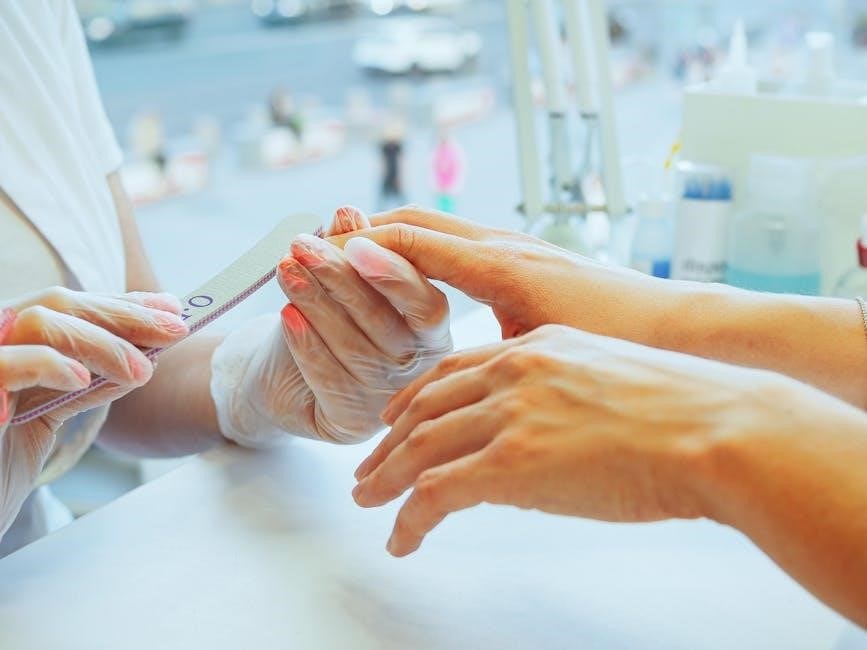
Dive into the world of enhancements! This section covers acrylic and gel applications, foundational skills for a nail technician. Acrylic application involves proper monomer-to-polymer ratio, bead placement, and sculpting techniques for desired shapes and lengths. Understanding product chemistry and potential allergic reactions is vital. Gel applications encompass various systems – soft gel, hard gel, and gel polish – each with unique curing requirements and removal procedures.
Mastering proper nail preparation, including dehydration and pH balancing, ensures optimal adhesion. Safe filing techniques prevent damage to the natural nail. Knowledge of different gel and acrylic systems, along with their pros and cons, is crucial for exam success and client satisfaction.
A. Acrylic Nail Application
Master the fundamentals of acrylics! This involves a precise monomer-to-polymer ratio for proper bead consistency and adhesion. Learn sculpting techniques to create various shapes – square, oval, almond, and stiletto – catering to client preferences. Understanding the chemical reaction between the liquids and powder is key, alongside recognizing potential allergic sensitivities.
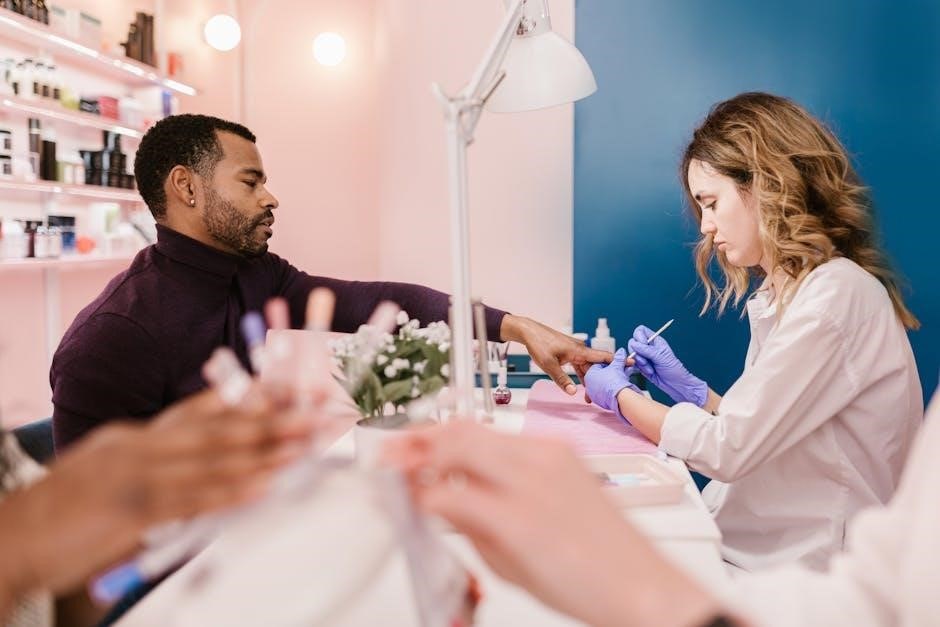
Proper nail preparation, including sanitation, cuticle care, and dehydration, is paramount. Practice consistent bead placement and feathering to achieve a seamless, natural-looking enhancement. Safe filing techniques are crucial to avoid damaging the natural nail plate. Expect exam questions on product knowledge, application order, and troubleshooting common issues like lifting.
B. Gel Nail Application
Explore the versatility of gel systems! This section covers hard gels, soft gels (soak-off), and gel polish application. Understand the importance of proper nail preparation – etching the nail plate for optimal adhesion is vital. Learn about UV/LED lamp curing times for each gel type, and the risks of under or over-curing.
Master techniques for flawless gel application, including avoiding skin contact to prevent allergies. Recognize different gel formulations and their specific uses – builder gels for extensions, and gel polish for color. Expect exam questions on gel safety, proper removal procedures (without damaging the natural nail), and identifying potential product issues like bubbling or lifting.
VII. Practice Exam Questions & Answer Keys
Sharpen your skills with realistic practice! This section features a comprehensive set of 150 multiple-choice questions mirroring the exam’s format and difficulty. Questions cover all core areas: sanitation, nail disorders, product knowledge, and practical techniques like manicures, pedicures, and artificial nail applications.
Each question is accompanied by a detailed explanation of the correct answer, clarifying the underlying principles and helping you understand why an answer is right or wrong. Utilize these keys to identify knowledge gaps and focus your study efforts. Expect questions testing your understanding of nail anatomy, disinfection procedures, and state board regulations. Mastering these practice questions is crucial for exam success!
A. Sample Multiple-Choice Questions
Test your knowledge with these representative questions!

- What is the primary function of an abrasive in nail products?
A. an abrasive. B. a bleach. C. a lubricant. D. an astringent. - Which step is crucial during a manicure?
A. Shape the nails. B. Soften the cuticles. C. Clean under free edge. D. Remove old polish. - Where should implements be stored after disinfection?
A. On a clean shelf. B. On the manicuring table. C. In a clean manicuring kit. D. In clean, closed containers. - What condition is characterized by nail biting?
A. Hangnails. B. Pterygium. C. Onychophagy. D. Onychorrhexis. - Ridges running lengthwise down the nail are known as:
A. spots. B. lines. C. stains. D. grooves.
B; Detailed Explanations of Answers
Understanding the ‘why’ behind each answer is key!
- (A) an abrasive is correct. Abrasives are used for filing and shaping nails.
- (A) Shape the nails is the initial, fundamental step. Proper shaping sets the foundation for the manicure.
- (D) In clean, closed containers ensures continued sanitation post-disinfection, preventing recontamination.
- (C) Onychophagy specifically refers to the habit of biting one’s nails.
- (D) grooves accurately describes longitudinal ridges, often a natural nail characteristic.
These explanations reinforce core concepts. Mastering these details will significantly improve your exam performance and practical skills as a nail technician. Reviewing these rationales solidifies your understanding.
VIII. Essential Tools and Products
Proficiency demands tool and product mastery! A comprehensive understanding of implements is crucial for success.
Common nail tools include clippers, files, buffers, cuticle pushers, and nippers – each serving a distinct purpose. Recognizing their specific uses is vital. Product knowledge extends to understanding ingredients; abrasives, bleaches, lubricants, and astringents all impact nail health.
Knowing the function of each ingredient ensures safe and effective application. Proper storage – on clean shelves or in closed containers – maintains sanitation. Familiarize yourself with acrylics, gels, and polish formulations. This section prepares you to confidently identify and utilize the tools and products of the trade.
A. Identifying Common Nail Tools
Mastering tool recognition is fundamental! Nail technicians must confidently identify and utilize a diverse range of implements.
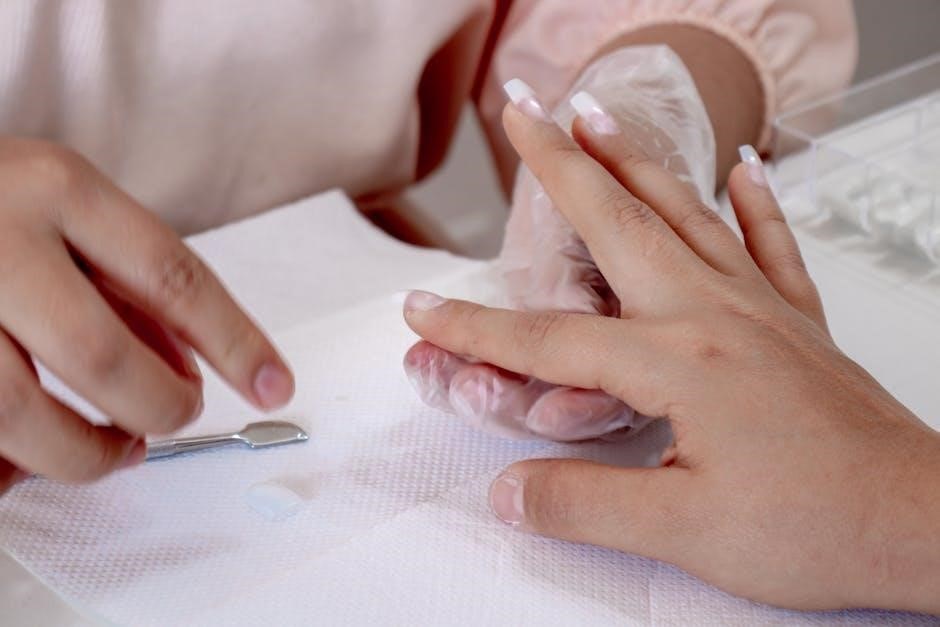
Essential tools include nail clippers – various types for different nail shapes – and nail files, available in grits for shaping and smoothing. Buffers refine the nail surface, while cuticle pushers and nippers safely manage the cuticle area. Disinfectant containers, brushes for cleaning, and UV/LED lamps for gel curing are also critical.
Understanding the specific function of each tool – from shaping to cuticle care – is paramount. Proper handling and maintenance extend tool lifespan and ensure client safety. Accurate identification is key to passing the exam and providing professional services.
B. Understanding Product Ingredients and Uses
Product knowledge is crucial for safe and effective service! Nail technicians must comprehend the composition and application of various products.
Acrylic monomers and polymers create durable enhancements, while gel polishes offer long-lasting color. Primers enhance adhesion, and dehydrators prepare the nail plate. Understanding ingredients like resins, plasticizers, and pigments is vital. Knowing the purpose of abrasives, bleaches, and lubricants is also essential.
Recognizing potential allergens and contraindications ensures client safety. Proper storage and handling maintain product integrity. The exam will assess your ability to match products to specific nail conditions and desired results, demonstrating a thorough understanding of formulations and their intended uses.
IX. State Board Regulations and Safety
Adherence to regulations protects both you and your clients! State board exams heavily emphasize safety and legal compliance within the nail industry.
Understanding disinfection protocols – utilizing EPA-registered disinfectants and proper sterilization techniques – is paramount. Knowledge of sanitation standards, including handwashing and waste disposal, is critical. Familiarize yourself with guidelines regarding client health screenings and contraindications for services.
Regulations cover workspace requirements, proper ventilation, and the safe handling of chemicals. The exam will assess your understanding of these rules, ensuring you prioritize a hygienic and legally compliant practice. Ignoring these standards can lead to fines or license revocation, so thorough preparation is essential.